
From Philly and the Pa. suburbs to South Jersey and Delaware, what would you like WHYY News to cover? Let us know!
Temple University’s new Sexual Harm Advisory Committee is working to improve the school’s handling of rape and assault, and student advocates say they’re cautiously optimistic that the work will create lasting improvement.
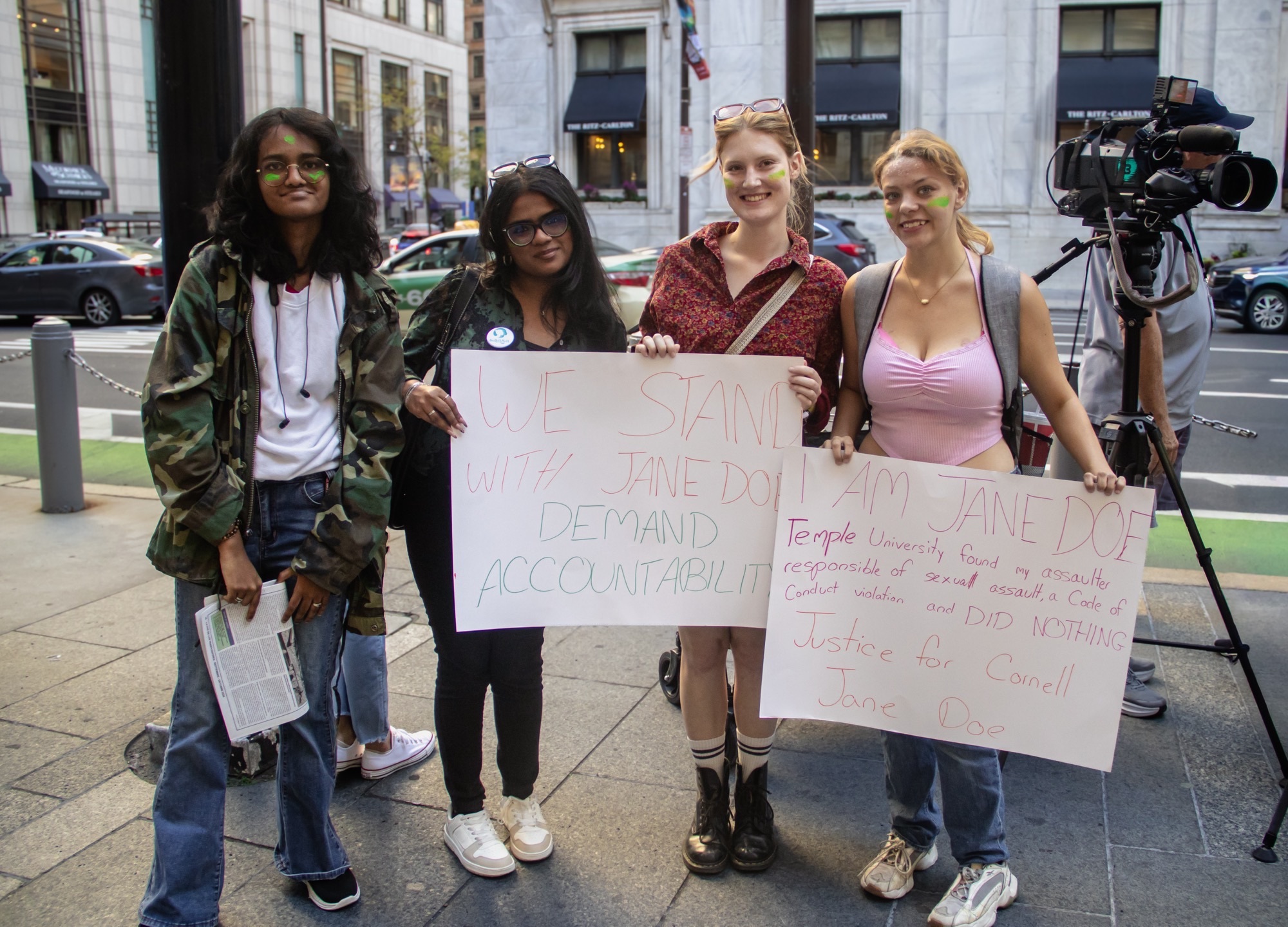
The group was formed at the direction of President John Fry in light of the Cornell University rape allegations, which sparked nationwide outcry about the school’s failure to seek meaningful accountability for the seven fraternity members who allegedly assaulted a 20-year-old sophomore identified as Jane Doe in a civil suit against the university and her alleged assailants.
In an Oct. 3 public memo announcing the creation of the Temple committee, Fry called the Cornell allegations “horrific and appalling.”
“We work with students and community members to navigate their journeys, and we strive to ensure they feel supported and are aware of all available resources, while holding perpetrators accountable. It is our institutional responsibility to continue to adapt and improve,” Fry said in a statement at the time.
Temple safety data found that there were eight recorded rapes in 2025 on its main campus in North Philadelphia, eight in 2024 and two in 2023.
The school is currently investigating two recent allegations of rapes at off-campus apartments, as well as an incident where a man exposed himself in a campus building.
While a spokesperson said the university cannot comment on specific cases, the new committee has met three times and jumped into work they anticipate will bring short- and long-term change.
The group has 18 core members drawn from students, faculty, staff and community residents.
Some bring specific expertise, and others simply want to be involved. Each of the six working sub-groups has a student co-chair.
Vice President of Student Affairs Jodi Bailey Accavallo co-chairs the committee and credited Fry for a “very proactive” approach that could become a model within higher education.
“This is not a closed-door, ‘We will tell you when the smoke stack goes up,’ kind of conversation,” Bailey Accavallo said.“This is really about: What does our community need? How are we serving them and where are we moving forward?”
She said the committee is dedicated to transparency, and students will be able to follow the progress.
“We might actually see the number of sexual assaults reported go up at the institution, and that would be a good thing, because that means that somebody wants to engage with us in a way where they perhaps didn’t feel safe in the past,” she said. “We know that we’re headed into hard conversations, and we want to have them in ways that we have not had them before.”
Temple professor Laura Sinko, a sexual assault nurse and researcher, serves on the committee and she’s encouraged by the seriousness of the school’s response.
Sinko has also served for five years as faculty advisor for Student Activists Against Sexual Assault, also known as SAASA. Today, from students to faculty to administration, she said there is a lot of “energy towards change.”
“Universities in general have a history of maybe not being as responsive to students, and I really hope that this task force can prove something different and start to rewrite some of the historical harms that have happened at universities across the country,” Sinko said.
The Sexual Harm Advisory Committee is not directly involved when a rape or sexual assault is reported. Those cases may go through police, through existing Title IX processes and, in the case of off-campus incidents, the student code of conduct. But Sinko said the committee will also examine those systems.
“We will be inviting students who have gone through our processes to see if we can understand how their experience was navigating that process to have lessons learned to inform our choices,” she said.


